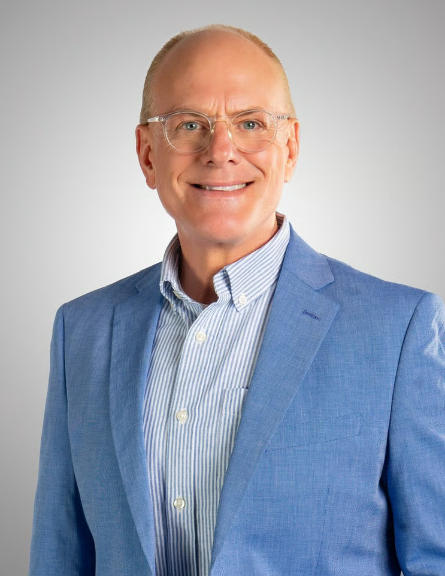
Nobel Laureate Joachim Frank Discusses AI and the Future of Experimental Science
UNITED KINGDOM, September 23, 2026 /EINPresswire.com/ -- Southern Finance and 21st Century Business Herald recently
Press Release Disclaimer: This is a press release distributed through the XPR Media network. It has not been independently verified by our newsroom.


UNITED KINGDOM, September 23, 2026 /EINPresswire.com/ — Southern Finance and 21st Century Business Herald recently interviewed Joachim Frank, the 2017 Nobel Prize laureate in Chemistry, about the role of artificial intelligence in scientific research and the continuing importance of experimental methods in scientific discovery.
During the interview, Frank discussed how AI is being used to analyze scientific data, process existing knowledge and assist researchers in developing hypotheses. He said that AI can accelerate parts of the research process, while experimental work remains an important means of testing hypotheses and investigating phenomena that are not yet understood.
The discussion comes as AI technologies are being increasingly applied across scientific fields, including structural biology, drug discovery and materials research. AI systems can process large datasets, identify patterns and assist researchers with tasks that previously required substantial amounts of time and computational resources.
Frank emphasized the relationship between computational tools and experimental research. In his view, AI systems rely on existing knowledge and experimental data, while scientific research also requires observations and experiments to test new hypotheses and generate new evidence.
Frank’s own research provides a historical example of how computational methods and experimental techniques can develop together. His work on single-particle cryo-electron microscopy helped establish a method for determining the three-dimensional structures of biological molecules from large numbers of two-dimensional electron microscopy images.
The approach addressed limitations faced by structural biologists studying molecules that were difficult or impossible to crystallize. By combining electron microscopy with computational image-processing methods, researchers could reconstruct molecular structures from noisy individual images.
Frank was awarded the 2017 Nobel Prize in Chemistry, together with Jacques Dubochet and Richard Henderson, for the development of cryo-electron microscopy for the high-resolution structure determination of biomolecules in solution.
His research has also had connections with the development of cryo-electron microscopy in China. Chinese researchers, including Gao Ning, Lei Jianlin and Gao Haitao, have worked in Frank’s laboratory and subsequently contributed to cryo-EM research and training in China.
During the interview, Frank also discussed how advances in scientific tools have changed the way researchers observe and analyze the natural world. He described AI as another technological development that can support scientific research, while highlighting the role of experiments in generating and validating new scientific knowledge.
The interview is part of Southern Finance’s “High-Level Interviews: Conversations with Global Scientific Giants” series, which features conversations with internationally recognized scientists on developments in science, technology and biomedical research.
Mo Zhang
Dongfang Yiyang (Beijing) Consulting Co., Ltd.
+86 133 1103 7732
email us here
Legal Disclaimer:
EIN Presswire provides this news content “as is” without warranty of any kind. We do not accept any responsibility or liability
for the accuracy, content, images, videos, licenses, completeness, legality, or reliability of the information contained in this
article. If you have any complaints or copyright issues related to this article, kindly contact the author above.

Media gallery